
ANNUAL REPORT 2025/2026 | 
 The financial sector will continue to evolve, shaped by key structural drivers such as sustainability and technological advancements, including GenAI. Through strong tripartite partnerships and a shared sense of purpose, I am confident that we will continue to create jobs and skills opportunities for Singaporeans and enable our workforce to thrive amid change.

Chia Der Jiun
Chairman, IBF
Amidst geopolitical uncertainties, economic headwinds, and the evolving development of artificial intelligence, IBF continued to deepen its role as the industry’s jobs and skills partner to support the financial sector and its workforce in responding to these evolving challenges.
Working closely with our tripartite partners, we have advanced our efforts to strengthen career pathways and skills mastery for the financial sector workforce over the past year.
Artificial intelligence is transforming the financial sector at an unprecedented pace. As financial institutions harness these technological advancements, it is essential that they evolve their workforce in tandem.
Preparing our financial sector workforce for this transformation is both an industry and national priority. IBF plays a key role in supporting this transition by working closely with financial institutions, trade unions and government partners to equip financial sector professionals with the skills needed in an AI-enabled financial sector.
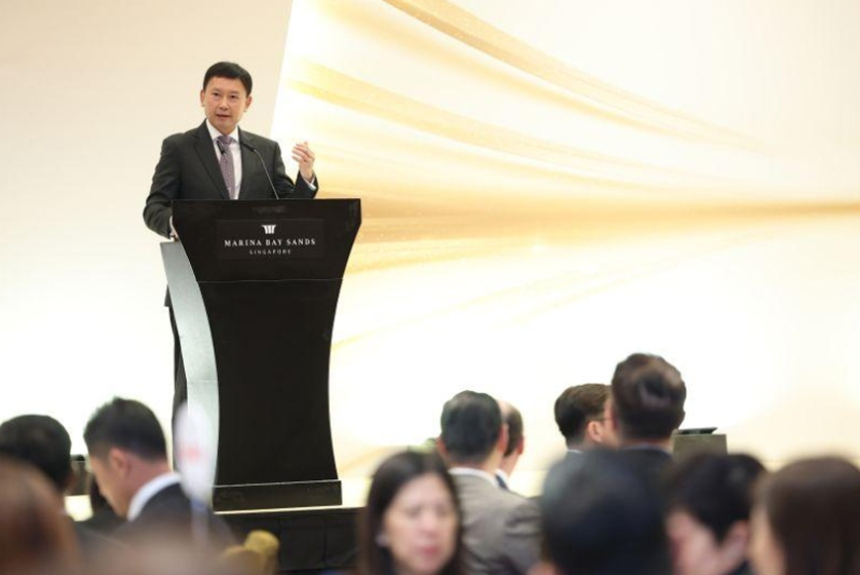
Minister of National Development and Deputy Chairman, MAS, Chee Hong Tat, delivering the keynote address to launch the GenAI JTM at the IBF Awards 2025
To better understand the implications of AI adoption on jobs and skills, IBF and the Monetary Authority of Singapore (MAS), with the support of Workforce Singapore (WSG) launched the Generative AI Jobs Transformation Map (GenAI JTM) last year. The GenAI JTM assesses the impact of AI/GenAI and provides a framework to prepare Singapore’s financial sector workforce to leverage on AI/GenAI effectively and responsibly. To kickstart this initiative, IBF, MAS have partnered with financial institutions to unpack the implications of AI adoption on specific job roles and testbed practical approaches to support workforce transformation.
This initiative is focused and centred around three key areas:
Advancing sustainable finance capabilities remained a core focus for the financial sector, not only for building institutional resilience but also for supporting the real economy’s transition to a low-carbon, sustainable future.
Since the launch of the Sustainable Finance Jobs Transformation Map (SF JTM) in 2024, about 190 Sustainable Finance courses have been accredited by IBF. Training participation has also seen a five-fold increase with close to 18,000 training on sustainable finance completed across 100 financial institutions. To recognise financial sector professionals for their proficiency in Sustainable Finance skills within the financial sector, close to 14,000 IBF Skills Badges were issued. These developments signalled strong market response to sustainable finance opportunities in the region. These initiatives also reflect IBF’s commitment to continue its efforts in building sustainable finance expertise.
IBF organised the inaugural Financial Industry Fiesta 2025 with the support of MAS, which brought together over 700 polytechnic students, polytechnic alumni, and representatives from financial institutions and Institutes of Higher Learning (IHLs) to showcase multiple pathways available for polytechnic talent within the financial sector. Students from all five polytechnics gathered in a single forum, to explore internships, traineeships, and work-and-study opportunities within the financial sector.
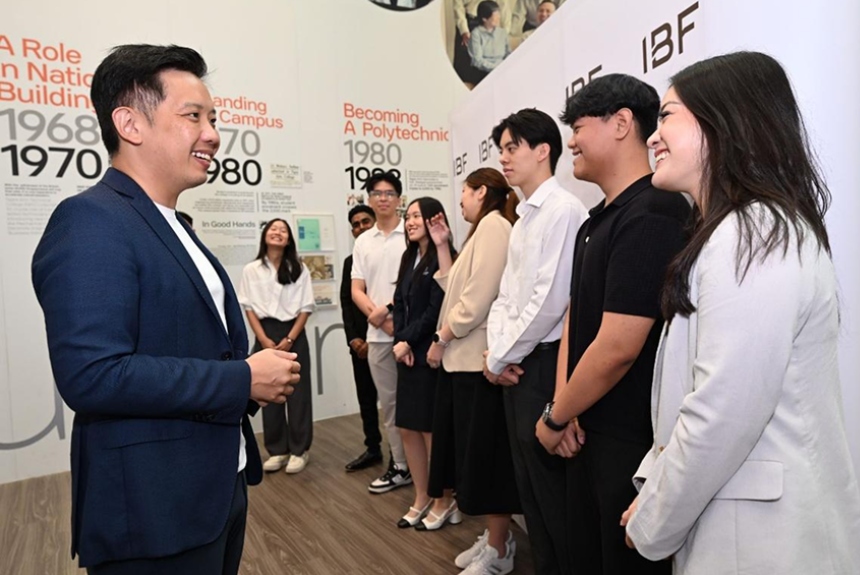
Minister of State for Trade and Industry and National Development, and MAS, Board Member, Alvin Tan, speaking to polytechnic students at the Financial Industry Fiesta 2025
At the event, 10 financial institutions pledged to offer approximately 300 internship and traineeship opportunities for polytechnic students over the next one to two years.
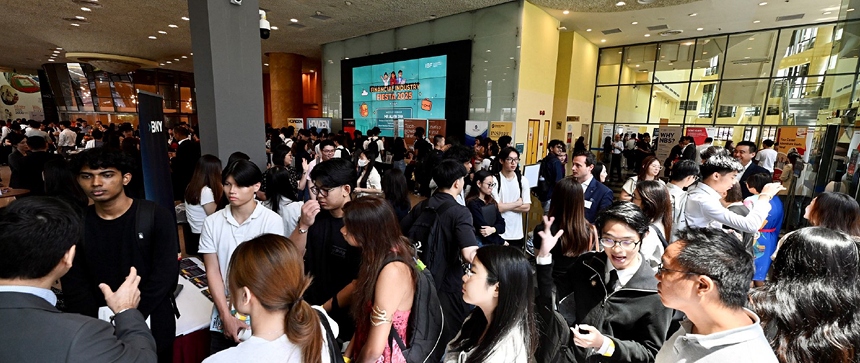
Financial institutions’ representatives sharing about internship and traineeship opportunities to polytechnic students at the Financial Industry Fiesta 2025
Complementing this, IBF also signed a Memorandum of Understanding (MOU) with key partners, including UOB, National University of Singapore (NUS), Nanyang Technological University (NTU), and Singapore University of Social Sciences (SUSS), to establish work-and-study initiatives, enabling students to gain industry experience while pursuing their studies.
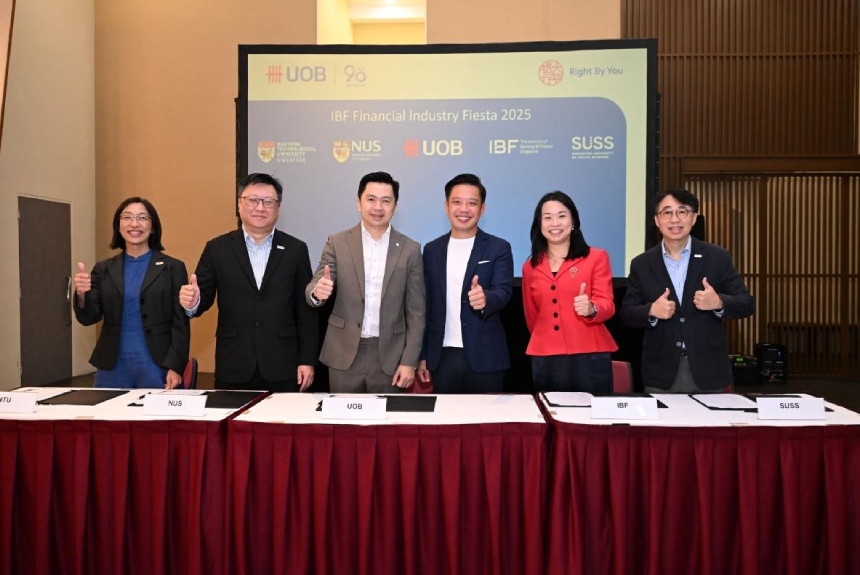
IBF CEO, Carolyn Neo, with Minister of State, Alvin Tan, and representatives from NUS, NTU, SUSS and UOB at the MOU signing during the Financial Industry Fiesta 2025
To support polytechnic talent through internships and traineeships, the Polytechnic Talent for Finance Scheme (PTFS), launched in 2023, has enabled more than 160 polytechnic students and graduates to gain industry exposure with 12 financial institutions.
The Finance Associate Management Scheme (FAMS) has equipped and prepared nearly 1,800 young professionals from 91 financial institutions for specialist and leadership roles since 2020, strengthening the financial sector’s talent pipeline and ensuring a steady flow of future-ready leaders.
Developing strong local leadership and deep industry expertise remains critical to sustaining Singapore’s position as a leading global financial hub.
The Asian Financial Leaders Scheme (AFLS) supports financial institutions to develop its pool of future leaders by sending their employees on eligible leadership programmes. About 180 financial sector professionals from 55 financial institutions have benefited from this scheme. In addition to the existing Asian Financial Leaders Programme (AFLP) by Human Capital Leadership Institute (HCLI) and Singapore Management University (SMU) which is targeted at senior leaders, McKinsey will also be offering two new programmes in 2026 – one for senior leaders and another for mid-level leaders with high potential. The expansion of AFLS to support mid-level leaders seeks to develop more Singaporean leaders by providing promising employees with critical insights and skills to address the needs and challenges of their leadership roles and responsibilities to navigate the diverse business, regulatory, and legal environment in the region.
The International Postings Programme (iPOST) equips Singaporeans with valuable international and regional exposure, deepening their expertise and broadening their perspectives. To date, over 280 financial sector professionals from 47 financial institutions have participated in overseas postings.
IBF and MAS have also established the Singapore Financial Leadership Network (SFLN) - a networking and thought leadership platform - that promotes leadership development and knowledge sharing to build a strong pipeline of Singaporean leaders.
We also work closely with financial institutions to support workforce transformation through initiatives such as the Career Conversion Programme (CCP). Since 2017, about 5,600 employees from 68 financial institutions have been reskilled or redeployed into new or enhanced roles, enabling them to adapt to evolving industry needs while strengthening their capabilities.
Since 2018, IBF Careers Connect has been providing targeted career guidance to jobseekers. In 2025, we engaged many individuals through curated career workshops and webinars, conducted in collaboration with financial institutions, industry experts, and IBF Fellows. More than 4,600 individuals have benefited from these services, supporting their transition into new roles and careers within the financial sector since its inception.
At last year’s IBF Awards, two new categories in Human Resources (HR) and Key Corporate Functions were introduced to recognise industry leaders who have excelled in shaping employee career pathways and contributed to delivering impactful learning outcomes for their organisations.
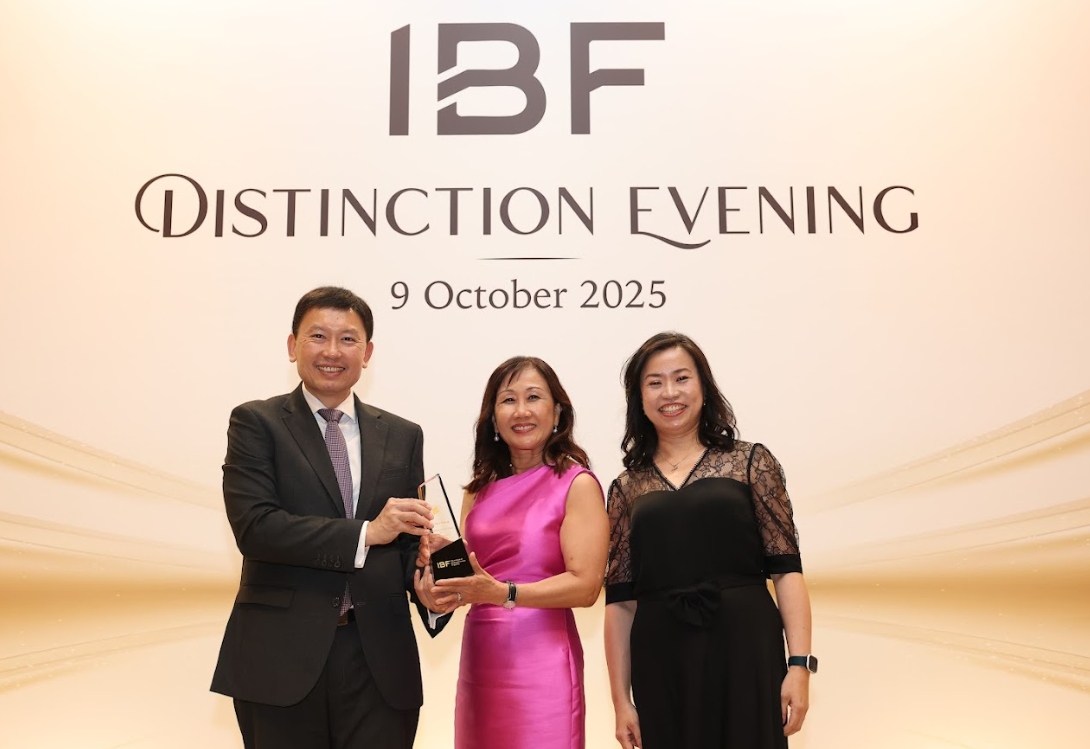
Minister of National Development and Deputy Chairman, MAS, Chee Hong Tat, presenting the IBF Distinguished Fellow in Human Resources to Lee Yan Hong of DBS, with IBF CEO, Carolyn Neo
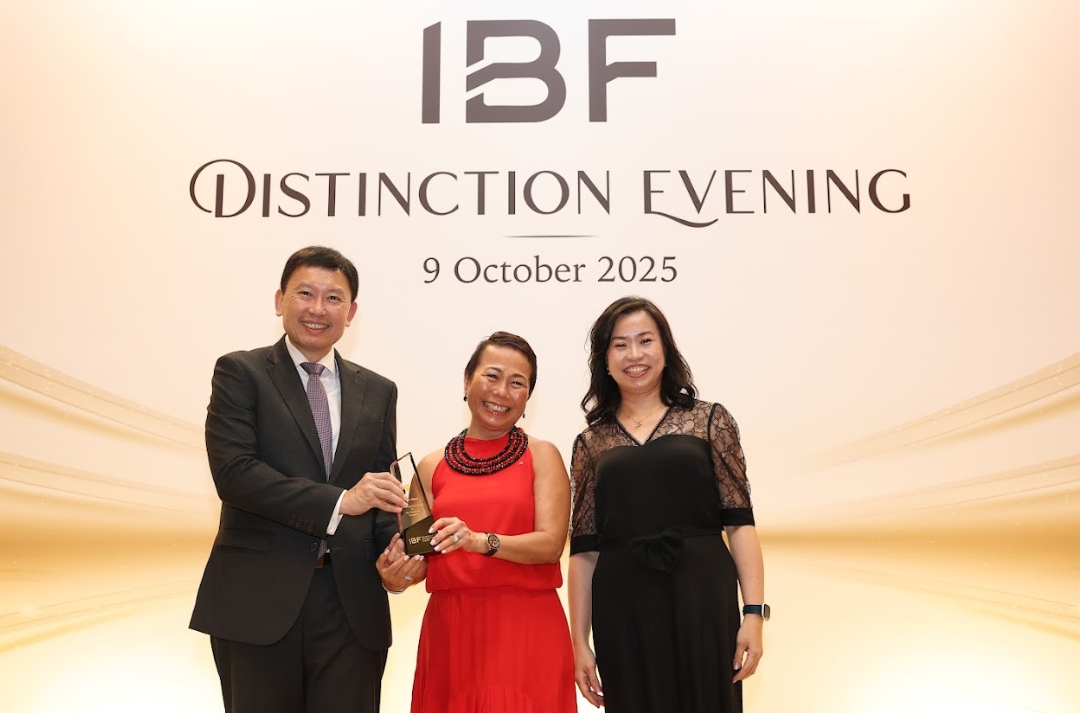
Minister of National Development and Deputy Chairman, MAS, Chee Hong Tat, presenting the IBF Distinguished Fellow in Key Corporate Functions to Karen Ngui of DBS, with IBF CEO, Carolyn Neo
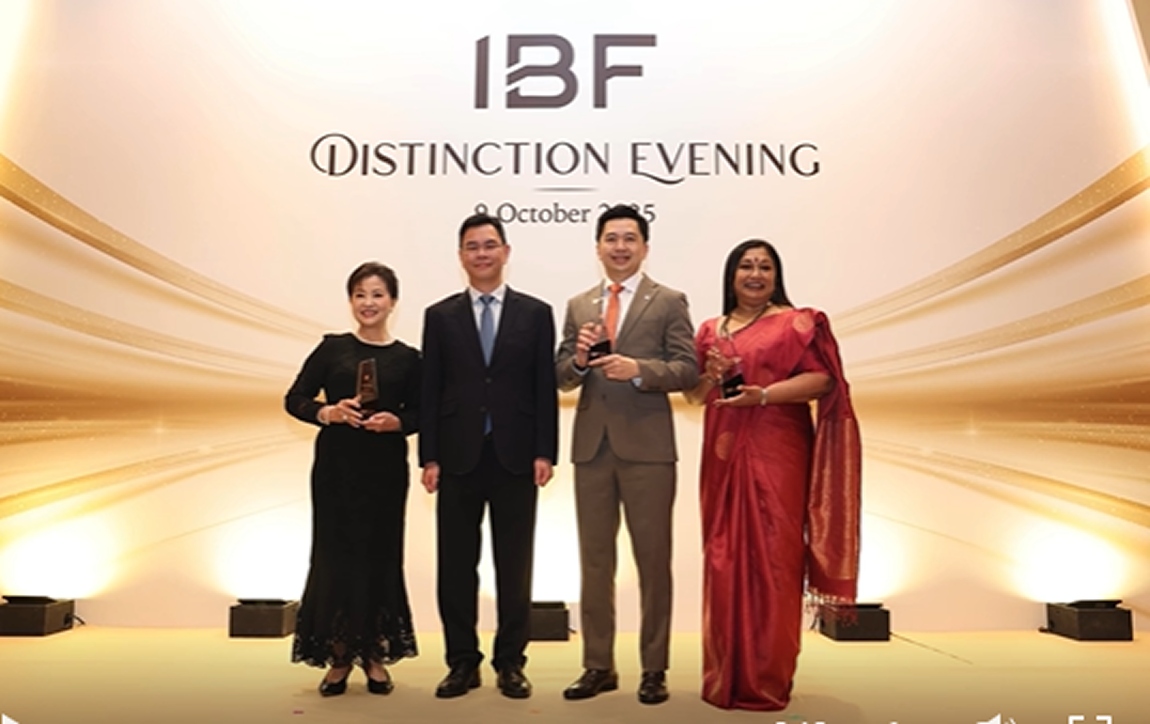
IBF Chairman and MAS Managing Director, Chia Der Jiun, with IBF Fellow recipients in Human Resources at the IBF Awards 2025
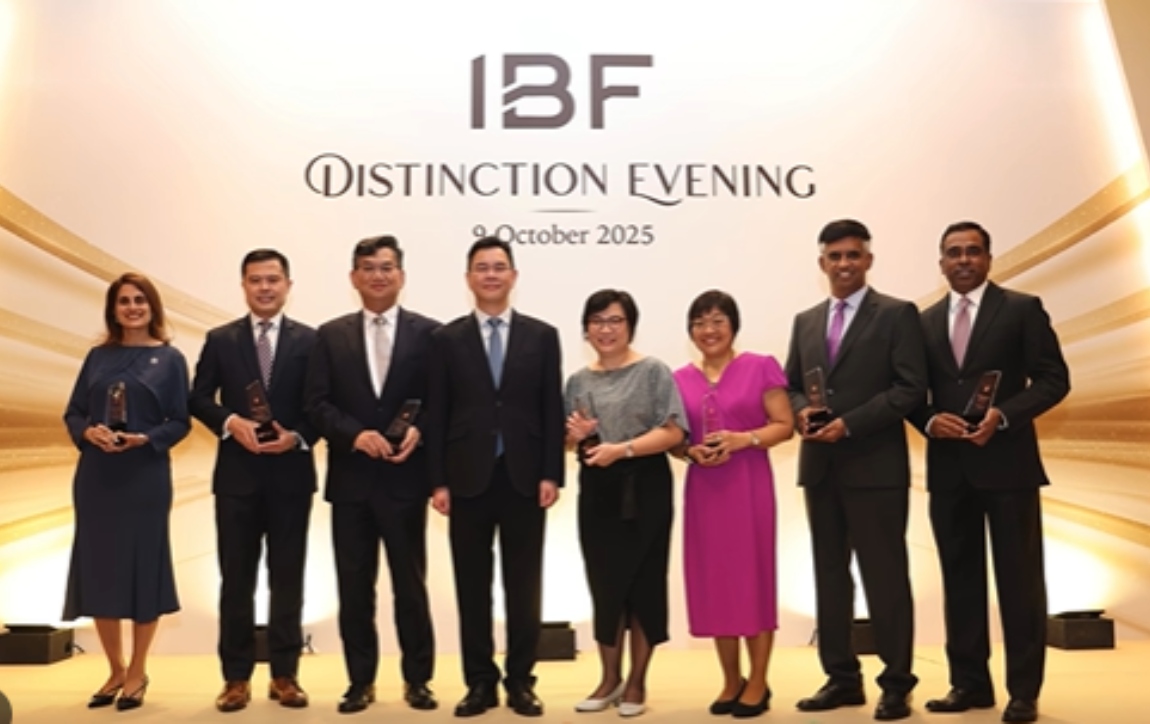
IBF Chairman and MAS Managing Director, Chia Der Jiun, with IBF Fellow recipients in Key Corporate Functions at the IBF Awards 2025
In addition, DBS, HSBC, Manulife, OCBC and UOB were conferred the IBF Inspire Award for their significant achievements and holistic commitments in skills and workforce development, young talent pipeline building and leadership development across their organisations.
Standard Chartered was conferred the IBF Advance Award in Skills Development (Sustainable Finance) for their commitment in developing the skills of their workforce through comprehensive and structured Sustainable Finance training pathways, while JPMorganChase was conferred the IBF Advance Award in Workforce Development (Young Talent) for their commitment in grooming young talent as part of their workforce development efforts.
In closing, I would like to express my immense gratitude to IBF Council, IBF Standards Committee, IBF Industry Workgroups, IBF Examination Boards, Examination Industry Panels and our tripartite partners for their unwavering support, guidance, and collaboration, which have been instrumental in driving our initiatives forward.
The financial sector will continue to evolve, shaped by key structural drivers such as sustainability and technological advancements, including GenAI. Through strong tripartite partnerships and a shared sense of purpose, I am confident that we will continue to create jobs and skills opportunities for Singaporeans and enable our workforce to thrive amid change.
individuals participated in IBF-recognised training programmes in 2025, including employees from 378 financial institutions.
Find Training Programmes
attained IBF Certification in 2025, including participants from segments such as Compliance, Private Banking, and Risk Management.
Find out about IBF Certificationwere issued to individuals since it was launched in 2024, recognising their proficiency in Sustainable Finance skills within the financial sector.
Find out about IBF Skills Badge
Sustainable Finance courses have been recognised since the launch of the Sustainable Finance Jobs Transformation Map in 2024, to support upskilling in this area.
Find IBF Sustainable Finance Jobs Transformation Map

Sustainable Finance was completed since the launch of the Sustainable Finance Jobs Transformation Map in 2024, to strengthen capabilities in sustainable finance.
Find IBF Sustainable Finance Jobs Transformation Map
195 financial institutions and training providers are available as of 2025, covering areas such as Generative AI and Sustainable Finance.
Find Training Programmesindividuals have accessed career guidance services at IBF Careers Connect since 2018.
Find out about IBF Careers Connect
from 68 financial institutions have been reskilled into new and redesigned roles through the Career Conversion Programme (CCP) since 2017.
Find out about CCP91 financial institutions have been groomed for specialist and leadership roles under the Finance Associate Management Scheme (FAMS) since 2020.
Find out about FAMS
across 12 financial institutions have benefited from the Polytechnic Talent for Finance Scheme (PTFS) since 2023, gaining skills and on-the-job training to enhance career opportunities.
Find out about PTFS

from 55 financial institutions have benefited from the Asian Financial Leaders Scheme (AFLS) since 2021, which develops them for regional and global leadership roles.
Find out about AFLS
from 47 financial institutions have participated in International Postings Programme (iPOST) to equip local talent to gain international exposure and expertise.
Find out about iPOST
(One of the) key takeaways from the programme is to be resilient and adaptable to every environment and new role.
- Jaslyn Lee, FAMS Participant

Read more
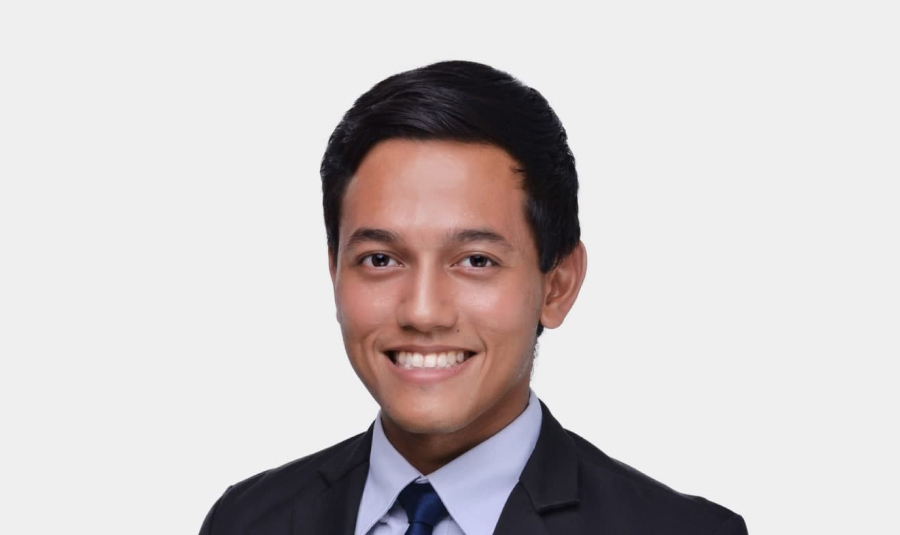
An international posting is a unique opportunity to gain perspective, accelerate professional maturity, and develop a truly global mindset.
- Julian Antony, iPOST Participant
Read more
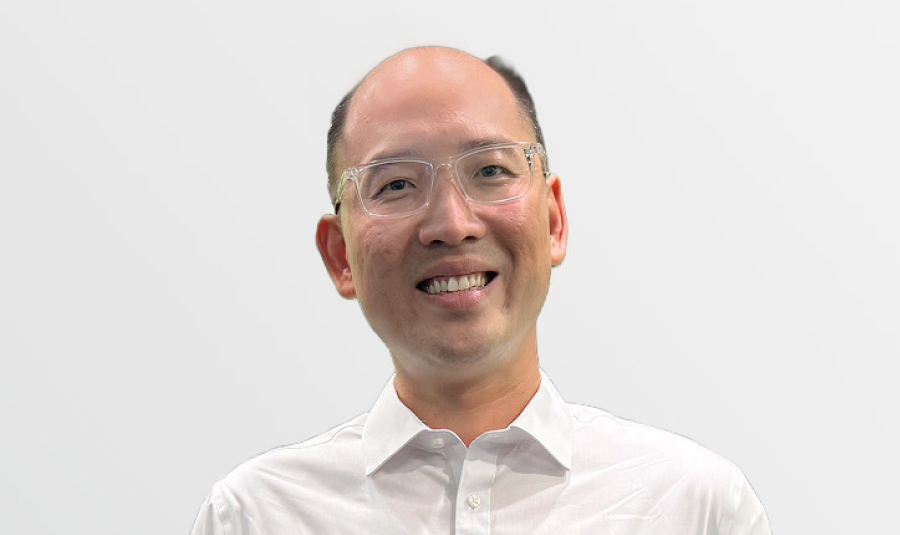
IBF Careers Connect acts as a pillar of support to mid-career professionals to navigate difficult career transition.
- Bobby Tan, Career Advisory Client
Read more
I see Sustainable Finance becoming a core part of the financial sector rather than a niche or standalone discipline.
- Jane Kwang, Reskilled in Sustainable Finance

Read more
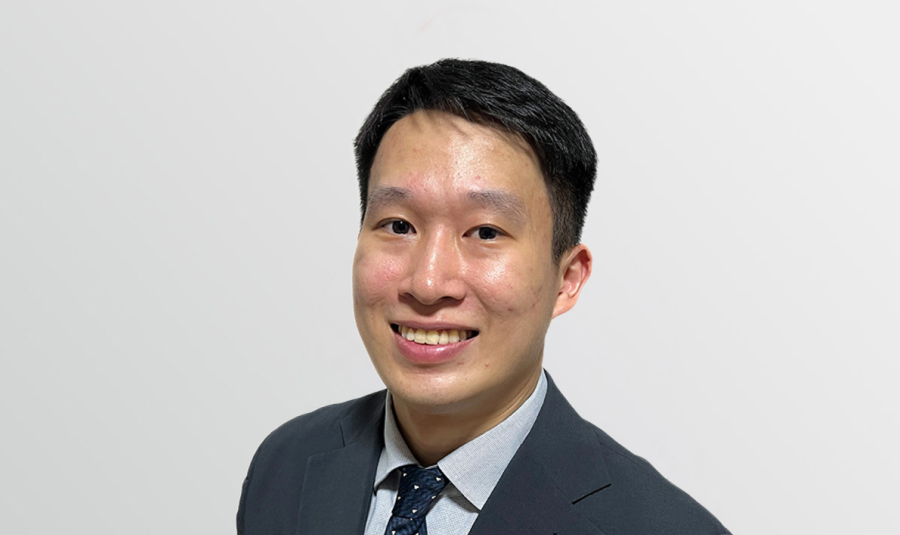
One of the technical skills I have acquired is how to better utilise GenAI to optimize results while one soft skill which I also learnt is to always think about the business application of ideas.
- Ashton Low, AIDA CoE Trainee
Read more
For many young professionals, the first few years of corporate life are about finding one’s footing. For Jaslyn Lee, however, those years were meaningful and exciting as she was given opportunities to take on diverse functions in one of Singapore’s local banks.
Currently an Assistant Vice President (AVP) and Payments Product Manager within the Consumer Banking Group (CBG) at DBS, Jaslyn started her career journey as a Graduate Associate with the Operations team when she signed up for the DBS Graduate Associate Programme. Supported by the Institute of Banking and Finance (IBF), the programme provides structured training and industry exposure for young finance professionals to be groomed for specialist and leadership roles.
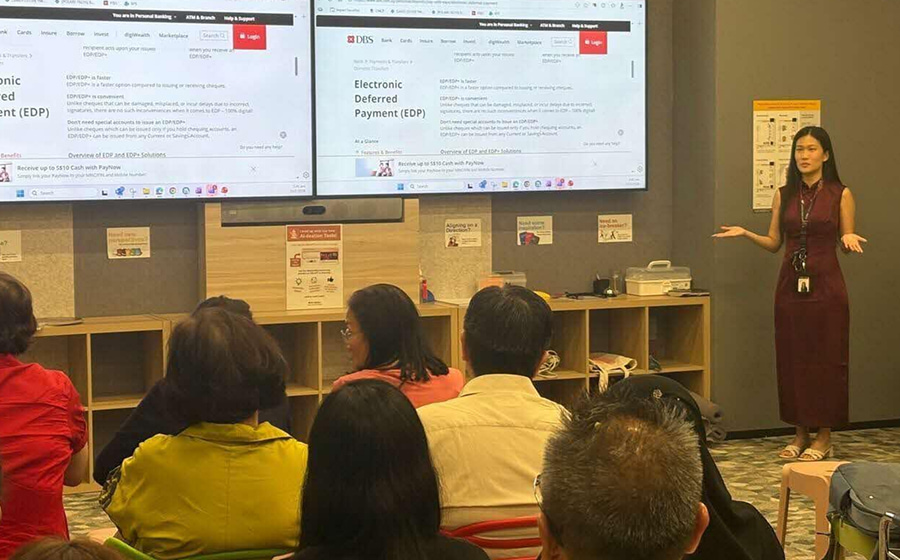
Jaslyn sharing the key features and benefits of digital payment solutions for Branch Service Managers, empowering them to guide customers.
Jaslyn’s connection with DBS began before she even graduated. "I was an intern in DBS’ campus recruitment team and saw an opportunity to build my career here in a structured learning programme that comes with training and opportunities from management," she shares.
Joining the Graduate Associate programme in 2020, she started her career in DBS as a Programme Manager within the Group Technology & Operations. This period was defined by a steep learning curve, as she navigated the transition from student to professional.
Reflecting on the "toughest moment" of the journey, Jaslyn shares that the initial adjustment to working life was the most challenging. Within her first two years, she experienced three role rotations and worked across three different teams led by different managers. These changes provided opportunities to manage each transition and hone her adaptability.
On top of her main responsibilities, Jaslyn also contributed to the organising of employee events through the DBS Recreation Club, such as the DBS Dinner & Dance - the bank’s biggest annual event.
However, this period has given her valuable exposure and taught her something important, “My main learning is the importance of prioritisation and stakeholder management where I learn to align priorities and expectations within the timeline and resources, and leverage on team support."
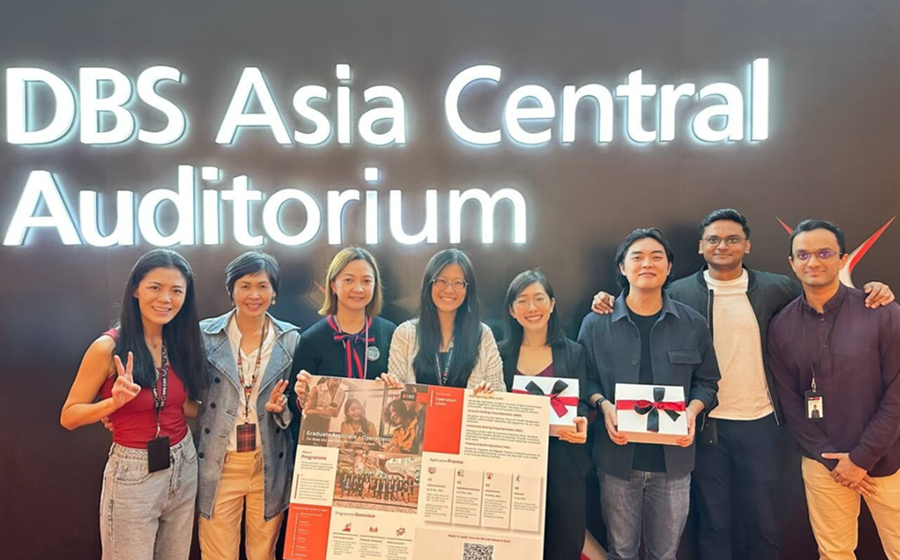
Jaslyn fostered close relationships and leaned on team support during her time with the Operations team.
After the programme, Jaslyn continued to grow her career through internal mobility, moving from Operations to her current role in Consumer Banking.
"To expand my experience and exposure in the bank, I took on an expanded scope to manage more projects in Operations and later crossed over to a new domain in consumer banking," Jaslyn explains. This internal move allowed her to build and cultivate her leadership skills through hands-on experiences.
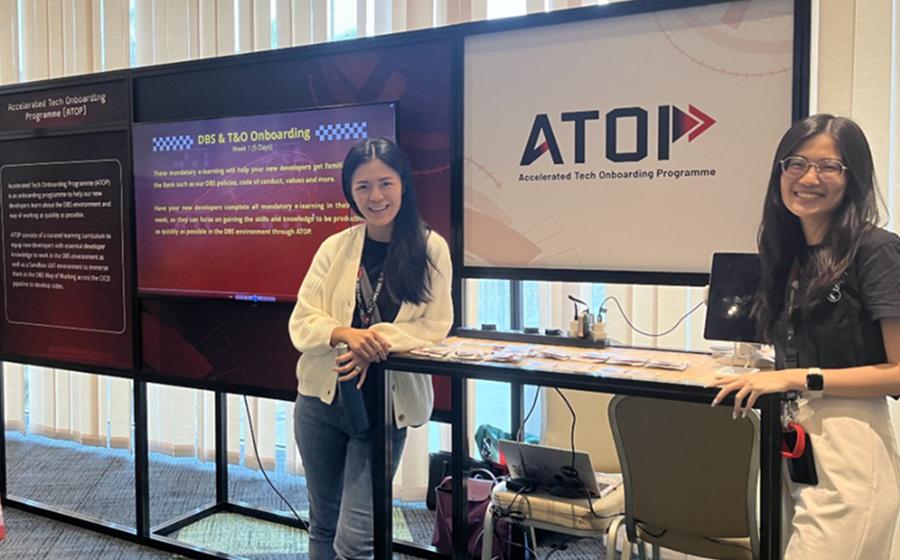
Jaslyn relishes the opportunity to take on more projects to grow professionally.
In her current role as a Payments Product Manager, Jaslyn works at the front line of enhancing our customers’ journeys. She finds immense satisfaction in her work as there are opportunities to resolve customers’ pain points and deliver meaningful impact to their overall banking experience.
While technical product knowledge is essential, Jaslyn identifies adaptability as her most crucial asset. By rotating through different functions, she learned how to communicate effectively with different types of stakeholders. She notes, "Adapting quickly has also been crucial as I have to quickly learn, adjust and contribute to my new roles." This holistic view of how the bank operates - gained through cross-functional collaboration - has given her a strategic edge in managing complex products and stakeholder expectations.
Having successfully transitioned from a Graduate Associate to her current role as an AVP, Jaslyn’s advice for those following in her footsteps is to remain proactive.
"Always come with an open mind and willingness to learn. The programme offers a wide range of exposure and opportunities hence the more proactive you are, the more you will gain!" She also emphasises the importance of self-improvement, "Do not be afraid to ask questions and seek feedback to accelerate your growth and learning."
For Jaslyn, she is glad that she has signed up for this programme as it has given her meaningful experiences and opportunities to kickstart her career in the financial sector.
The Finance Associate Management Scheme (FAMS) is a talent development initiative to increase opportunities for young Singaporeans to be groomed through structured talent development programmes to position them for specialist and leadership roles in the financial sector. Find out more here.
In the world of banking, technical expertise is only the starting point for a successful career. To truly excel, one must also master the art of navigating different workplace cultures and local regulatory landscapes with finesse. And having a good grasp of technical knowledge is only half the battle. The other half is the ability to understand nuances of a new market, and communicate effectively within it.
At Deutsche Bank, global experience is a powerful catalyst for growth. By supporting international mobility through the IBF-backed International Postings Programme (iPOST), the bank empowers Singaporean talent to broaden perspectives, build confidence in diverse markets, and develop regional capabilities needed to thrive in an interconnected financial world. These overseas experiences shape professionals who return with deeper insight, stronger leadership capability, and a renewed sense of purpose in contributing to the region’s financial ecosystem.
For Julian Antony, who works in the APAC Trade Finance and Lending division at Deutsche Bank, iPOST provided a valuable platform to advance his leadership capabilities while gaining first-hand exposure to a key regional market.
While based in Singapore, Julian recognised that to excel in his role, he needed a deeper understanding of strategic markets such as South Korea.
"I wanted to challenge myself by being placed in a new environment and gain exposure to a strategic market," Julian explains. With the backing of his senior management and human resources division, he embarked on an iPOST assignment to South Korea in 2024.
Working in South Korea presented unique challenges, from language barriers to distinct local business practices. During the posting, Julian worked on the ground in a fast-moving environment, collaborating directly with local team members and international clients. To succeed, Julian’s approach was one of proactive observation and adaptation. "I overcame these barriers by proactively learning local business norms, observing communication styles, and adapting my approach to be more structured, respectful of customs, and context‑driven," he notes. By staying open to feedback and showing consistent patience, he was able to build the trust necessary for effective collaboration.
The breakthrough moment came during a complex cross-border transaction where both the Singapore and South Korean teams aligned seamlessly on structuring and documentation despite different working styles. "It reinforced how mutual respect and shared objectives can transcend cultural differences and drive strong outcomes," Julian recalls.
A pivotal part of the iPOST experience is the access to senior leadership in the host country. Julian found a mentor in a senior Korean colleague who balanced technical expertise with deep cultural sensitivity.
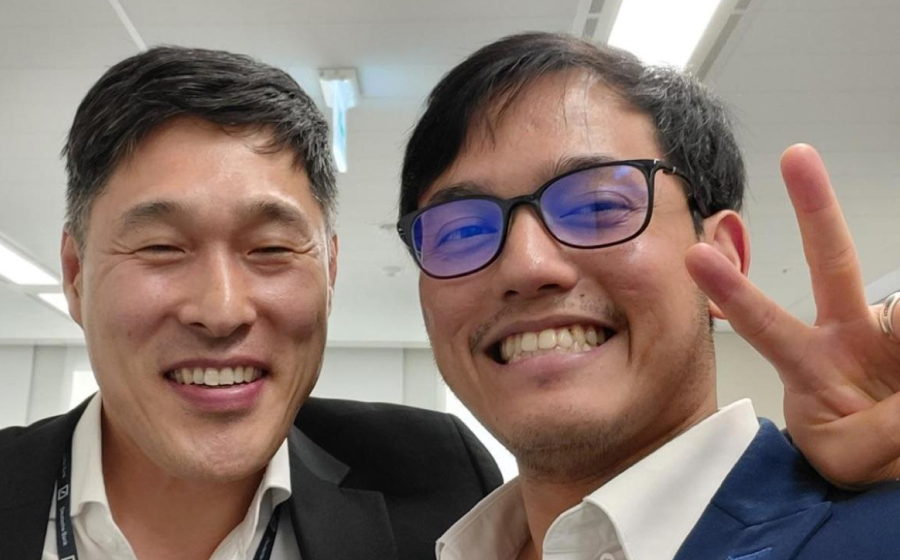
Through his mentor, Julian learned that the best leaders combine deep technical knowledge with genuine empathy.
This mentorship challenged Julian’s assumptions and pushed him to think more strategically. He was encouraged to look beyond the immediate transaction to see how senior bankers balance local nuances with global priorities. This perspective has fundamentally changed how Julian operates back in his regional role today.
Since returning from his posting, Julian has become more confident in handling complex cross‑border deals and executing them independently. Reflecting on his experience, Julian says, "The assignment strengthened my market and industry knowledge, cross‑border deal execution and documentation skills, as well as cross‑cultural communication, adaptability, and resilience.”
The cross-cultural communication skills developed in South Korea now allow him to engage regional stakeholders more effectively and anticipate differing expectations in deal structuring.

Julian’s time in South Korea has given him perspective and a pathway to his future goals.
Through the iPOST programme, Julian has not only strengthened his industry knowledge, but also laid a strong foundation for a long-term career in trade finance across the region.
Julian’s aspirations are set on the regional stage. "My aspiration is to build a long‑term career in structured trade and working capital solutions, where I can contribute at a regional level by delivering innovative, cross‑border financing solutions for clients across APAC. Over time, I aim to develop into a trusted product and structuring specialist who can bridge local market nuances with global banking capabilities while mentoring junior talent."
To support this growth, he intends to continue his professional development by elevating his existing skillsets in leadership and strengthening his expertise in trade finance and regional regulatory frameworks. He believes that focusing on cross‑border product structuring and strategic stakeholder management would strongly support his long‑term growth.
Stories like Julian’s reflect Deutsche Bank’s ongoing focus on developing talent through meaningful experiences that benefit both individuals and the wider organisation.
For other finance professionals considering a similar leap to overseas posting, Julian’s advice is to embrace the unknown and recognise that the greatest growth often happens when you are far from home.
The International Postings Programme (iPOST) is a talent development initiative, to increase opportunities for Singaporeans to be groomed through overseas postings to build international capabilities. Find out more about IPOST here.
In the world of financial crime compliance, stability is often measured by the strength of one’s track record. For Bobby Tan, however, that stability was shaken by an unexpected corporate restructuring. Suddenly, a seasoned leader with deep regulatory experience found himself at a crossroads.
Bobby’s record was impeccable. With nearly eight years at UBS leading large regional AML (Anti-Money Laundering) teams across Singapore, Hong Kong, India, and Japan, Bobby’s professional identity was deeply rooted in operational leadership.
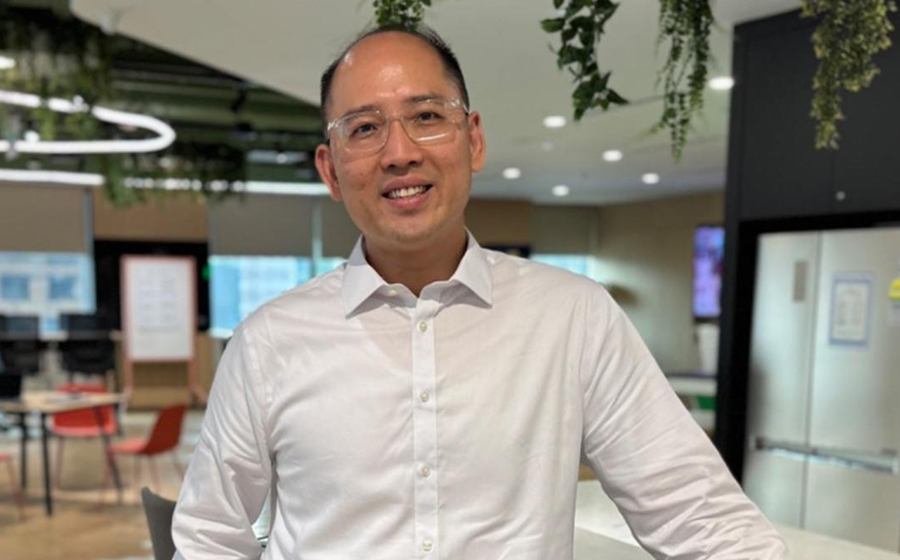
A banking veteran and experienced leader, Bobby soon learned that he had to pivot in his career.
However, the corporate landscape shifted unexpectedly in early 2025. A major restructuring meant that his long-standing role was impacted, forcing a sudden and daunting pause in a career that had only ever moved forward.
"It was a moment that shook the stability I had always associated with my career path," Bobby admits. "Despite my experience, I felt lost in a competitive job market after a sudden disruption."
The months following the restructuring were a period of profound reflection.
Despite a decade of navigating high-stakes regulatory frameworks and leading regional teams of up to 50 professionals, Bobby found himself at a daunting crossroads. He was certain that his future remained in financial crime compliance, yet he felt increasingly sidelined in a hyper-competitive market that seemed to demand a different kind of 'pitch.'
It was during this half-year journey of navigating the unknown that Bobby signed up for a career advisory session with IBF Careers Connect. His career adviser, Sherlyn Soh, provided the outside-in perspective he needed to stop looking backward at what was lost and start looking forward at his untapped potential.
While many view career advisory as a functional service for job seekers, Bobby’s experience proved it is a vital pillar for mid-career professionals navigating difficult transitions. The career coaching sessions provided more than just practical tips; they offered a space for deep reflection.
"My adviser showed empathy, industry awareness, and a genuine commitment to align my strengths with evolving market needs," Bobby explains. "She helped me connect my leadership in AML operations and regional stakeholder management into a coherent value proposition."
One of the most valuable insights Bobby gained was the ability to reframe his experience. In a fast-evolving sector, being experienced isn't always enough; one must be "future-focused."
Through the coaching sessions, Bobby shifted his narrative. He moved away from simply describing past operations to highlighting his capabilities in transformation, automation, and regulatory change leadership. He began to communicate his achievements not as a list of responsibilities, but as strategic outcomes that met the modern needs of financial organisations.
This shift in "pitch" bore fruit half a year later when Bobby landed a pivotal new role: Head of Compliance Transformation and Reporting at Manulife.
Joining Manulife marked Bobby’s first career step outside of global banking - a move that required him to translate years of banking-specific financial crime expertise into the nuances of the insurance sector. While the core principles of compliance remain, the operational landscape differs. To bridge this gap, Bobby has adopted an agile learning attitude, refusing to rest on his laurels despite his seniority.
He is currently focused on deepening his knowledge across the end-to-end insurance business, including product design, distribution channels, underwriting practices, claims processes, and customer experience. Bobby recognises that this broader understanding is essential to "drive more impactful and relevant compliance transformation" in his new environment.
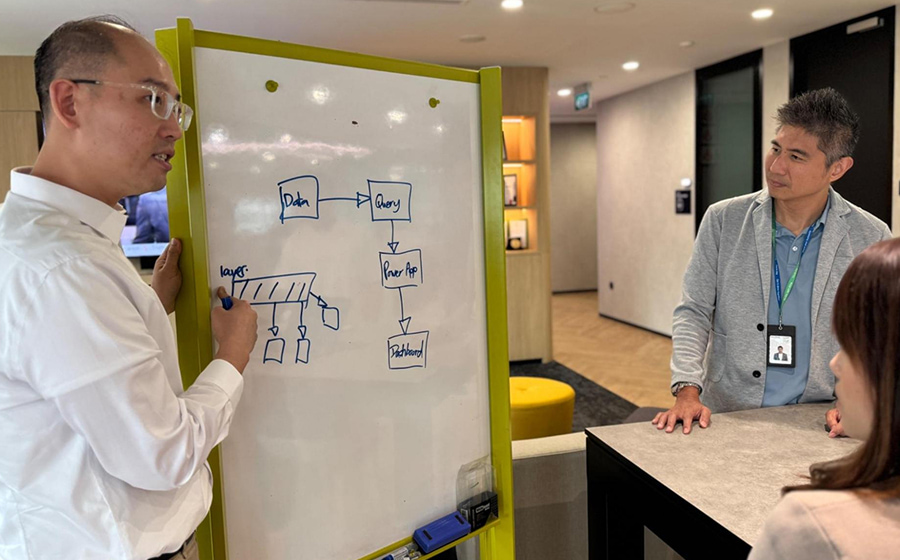
Bobby empowers his team to think critically, creatively and to embrace digital tools.
His current mandate is clear: to make compliance processes "easier, better, and faster." "I chose Manulife because it offered a clear mandate to modernise compliance," he says. "I’m now focused on looking end-to-end across our workflows to identify what can be simplified or automated to strengthen governance."
Following the advice of his career adviser to remain future-focused and outcome-driven, Bobby has fully taken charge of his career trajectory at Manulife. Bobby is now developing his capabilities in data analytics and visualisation to enable predictive reporting and better risk management. By bridging his deep AML background with RegTech solutions - including automation, AI-enabled monitoring, and next-generation workflow platforms - he has gained renewed confidence to chart the next phase of his career.
Tapping on his rich experience in banking, Bobby is also focused on deepening his expertise across the full spectrum of the insurance business - from product design and distribution channels to underwriting, claims, and customer experience. This broader understanding is crucial for driving impactful and relevant compliance transformation at Manulife.
In addition, he is honing his leadership skills to empower his colleagues to think creatively and to challenge assumptions.
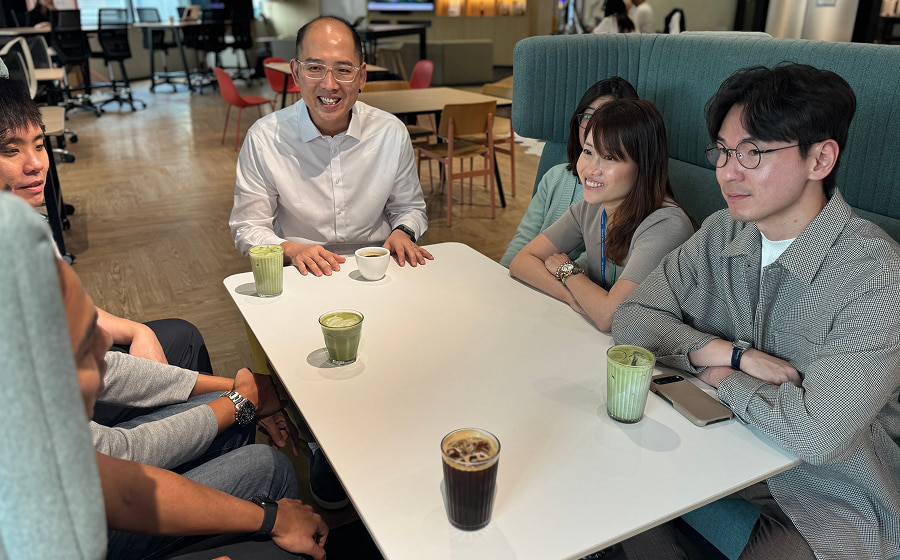
Having led diverse teams across different regions, Bobby hopes to leverage on his experiences to inspire innovation and open-mindedness amongst team members.
Reflecting on his journey, Bobby’s advice to other finance professionals is simple: Plug in early.
"A career adviser or mentor brings an 'outside-in' perspective that can uncover blind spots and help you discover your career purpose in ways you may not have considered," he notes. If he could time-travel, Bobby says he would tell his younger self to be bolder in asking for help and to trust the system.
Bobby isn't just managing a function; he is a transformation enabler. He leads a team of forward-thinking professionals, coaching them to "challenge the status quo, to experiment, and to embrace digital tools and smarter ways of working." This journey from an unexpected career disruption to a strategic leadership role at Manulife proves that with the right guidance from IBF Careers Connect, a transition can be more than just a new job - it can be a complete professional reinvention.
Today, Bobby stands as a prime example of professional resilience. By leveraging his foundational expertise while fearlessly pursuing new skills in AI and data, he has turned a career disruption into a powerful catalyst for growth. His story serves as an optimistic reminder that in a fast-evolving sector, the right guidance and a proactive mindset can transform any challenge into an opportunity for a truly meaningful reinvention.
IBF Careers Connect provides career guidance and support to help individuals in developing or transitioning their careers in the financial sector. Find out more about IBF Careers Connect.
For many finance professionals, the move into a new domain is driven by a desire for a fresh challenge. Jane Kwang is a prime example of this professional evolution. After spending several years with OCBC’s Global Markets Business Process Transformation team, where she built a strong foundation in the treasury market, Jane decided to explore new ground.
Today, she is part of the Sustainability Office within OCBC’s Global Wholesale Banking division. As the leader of the ESG intelligence team, she has moved from refining established market processes to building new systems in a rapidly evolving sector.
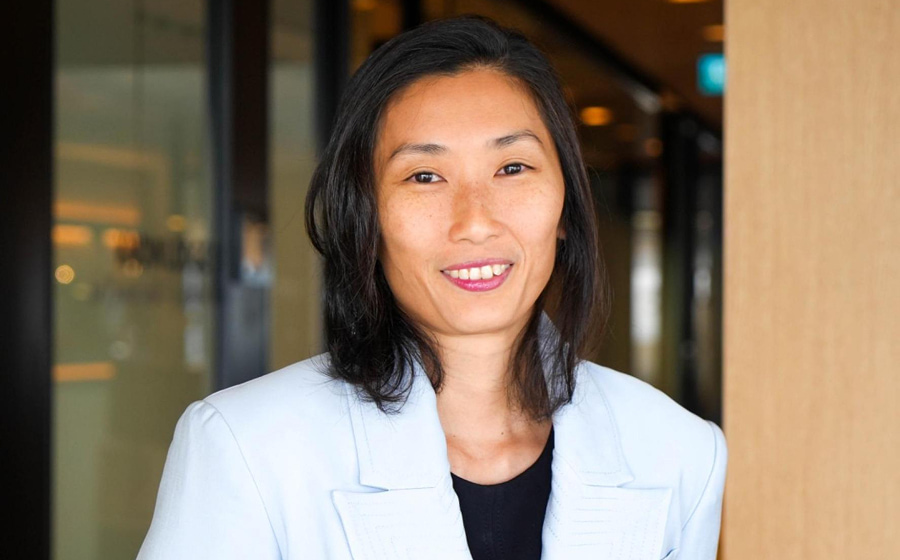
With the bank’s support for internal career moves, Jane found a new opportunity to grow within the Sustainability Office.
Jane’s transition was supported by a workplace environment that encourages employees to expand their horizons. After years in her previous role, she felt the need to apply her project management and analytical skillsets in a new context.
"OCBC has also fostered a culture that supports internal mobility and encourages employees to explore opportunities across the group,” Jane shares. “This gave me the confidence to consider a different path, knowing that career development and cross-functional exposure are genuinely encouraged and valued."
Entering the sustainability space meant stepping into a field that was still being defined in Singapore. Jane explains how this created an atmosphere of collective growth rather than individual competition: "Sustainability at that time was relatively new in Singapore, and that was part of what drew me to it. Even the seniors and my teammates were learning how to navigate it together, which created a unique environment of shared discovery. It wasn’t just about stepping into a new role but stepping into a space where everyone was figuring things out collectively, building frameworks from scratch, and shaping what the work could look like."

Working in a new industry allowed Jane and her colleagues to learn from each other and grow collectively.
While Jane’s growth in sustainable finance was largely driven by hands-on experience, her formal journey began with a curiosity about the financial and strategic implications of one of the industry’s biggest buzzwords – sustainability. This led her to signing up for an IBF-recognised programme, “What has Sustainable Banking got to do with me?”.
The course served as a critical introduction to the world of ESG, helping Jane move beyond the layman’s perspective and gain a richer understanding of how Sustainable Finance directs money toward real-world change by balancing environmental goals with business value.
"Going through the programme was really my first formal step into the world of sustainability. It introduced key concepts like net zero, climate risk, and the broader ESG landscape, which helped me build a basic foundation, and understand the terminology and direction the industry is moving toward."
In her current role, Jane is focused on driving strategic value by rethinking how data and AI can improve existing processes. She notes that the work requires a forward-thinking mindset and a willingness to explore fresh ideas.
Despite the shift in subject matter, Jane has found that the systematic and analytical mindset she developed in her previous role remains her most valuable asset. This structured approach helps her deliver insights that are both thoughtful and actionable.

Jane’s analytical skills and curiosity have become her greatest strengths in her new role.
Reskilling has fundamentally changed Jane’s perspective on the role of sustainability in banking. She now views it not as a standalone discipline or a niche financing activity, but as a core enabler of real-economy transformation.
"Before reskilling, my view of Sustainable Finance was quite simplistic and binary, and I associated it mainly with financing green activities and preventing greenwashing. After reskilling, I now understand Sustainable Finance as a critical enabler of transition, not just an end-state."
Jane remains energised by the blank drawing board her current role provides. She aspires to continue growing in spaces that allow her to design and build new ideas from the ground up, moving from concept to a finished product that adds tangible value.
For other professionals considering a similar transition, Jane shares that "Sustainability can feel like a big, complex space, especially if you’re new to it or coming from a completely different background. If you are considering it, take the leap and be brave in starting over as a beginner."
IBF-accredited programmes in Sustainable Finance provide the foundational knowledge and technical skills to support professionals transitioning into the growing field of sustainable finance. Find out more here.
Ashton Low began his banking career through UOB’s AI and Data Analytics Centre of Excellence (AIDA CoE) programme - a flagship talent development initiative supported by the Institute of Banking and Finance (IBF) and Monetary Authority of Singapore (MAS). This initiative offers a clear blueprint for how structured, industry-backed programmes equip fresh graduates with real world exposure to thrive in an AI-driven financial sector.
Like many high-achieving graduates, Ashton entered the workforce with a strong theoretical foundation from the National University of Singapore (NUS). However, he was under no illusions about the jump to a professional setting.
"I was aware that real-life initiatives would present a completely different set of challenges," Ashton shares. "They are often far more unpredictable and complex than what is taught in a classroom."
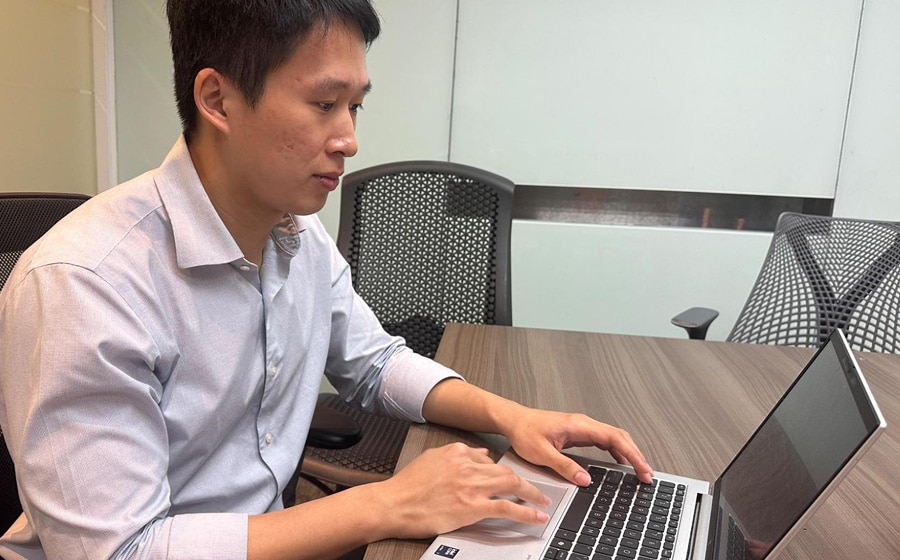
Trained in the field of AI and Data Analytics, Ashton knew that the AIDA CoE programme would be highly relevant for him.
It was this desire to experience the "dynamic intersection between finance and data science" that led Ashton to UOB. When he came across the job listing on LinkedIn, it immediately stood out: "It caught my attention as it was a graduate tech programme in a bank and furthermore, it was primarily focused on AI and Data Analytics which was my field of study." By joining the IBF-supported AIDA CoE programme, Ashton found a structured pathway to apply his academic specialisation to the complex world of banking.
One of the hallmarks of the programme is the blend of academic rigour and hands-on application. For Ashton, this means balancing weekly lessons at National University of Singapore-Institute of System Science (NUS-ISS) with a role in UOB’s Wholesale Banking department.
He is currently working on a high-priority project to automate a process by using Generative AI (GenAI) to extract ESG (Environmental, Social, and Governance) metrics for companies. By leveraging GenAI, the project seeks to turn a manual, repetitive task into an efficient digital workflow, freeing up valuable man-hours for higher-priority strategic work.
Ashton explains how technology bridges this gap: "By utilising workflow automation tools and GenAI, the team hopes to automate this manual work, driving efficiency and clearing up more manhours for critical tasks."
Beyond specific pipelines, GenAI has become a versatile research assistant in his daily workflow. Ashton adds, "One way GenAI has helped in my work is the ability to rapidly sieve through the web for potential data sources as references. While it is important to note that the data sources may not always be reliable or correct, it serves as a good starting point and helps to reduce manual search work."
While technical skills – such as prompt engineering and data sourcing – are vital, Ashton emphasises that the most valuable lesson he has learnt through the graduate tech programme is surprisingly non-technical. It is the art of bridging the gap between data and the real world. He has learnt that for a project to succeed, he must think of ideas that provide real business impact beyond meeting technical requirements and delivering solutions.
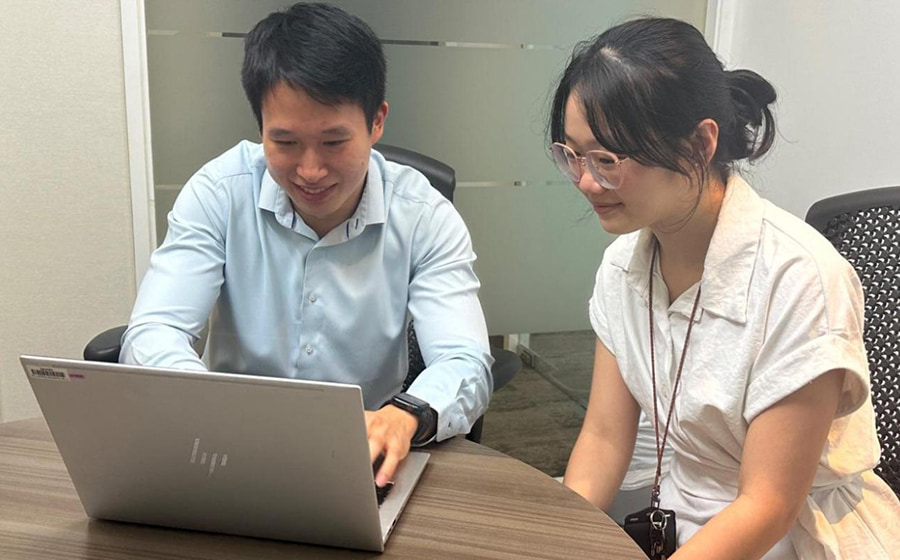
One of Ashton’s learning takeaways was how to leverage on his skills and experiences to meaningfully fulfil business objectives.
Ashton has come to realise that technical work is only the beginning. He now places a heavier emphasis on his ability to translate complex data into clear, actionable insights for business units. By ensuring that stakeholders understand the reasons behind the numbers, he can help turn technical projects into real-world benefits for both the bank and its customers.
Ashton believes this ability to translate complex data into a business-relevant language is the ultimate future-proof skill. As he puts it: "In a world where AI/GenAI is changing constantly, I believe that the ability to communicate effectively (bridge the gap between technical teams and business stakeholders) will remain an indispensable skill."
A core component of any programme is the emphasis on mentorship. For Ashton, working under his supervisor, Darren, provided a vital practical perspective on leadership.
Ashton recalls a specific piece of advice from Darren that changed his perspective on workplace stress. His advice was, "There will always be times when you feel stretched but treat it as an opportunity to grow and see it as a positive experience."
This mindset shift - from viewing a heavy workload as a burden to seeing it as a platform to prove one’s abilities - is exactly the kind of professional resilience that Ashton aspires to cultivate.
Ashton’s aspirations won’t stop at his graduation in July 2027. He plans to pursue a Master’s degree programme focusing on Large Language Models (LLMs) and Computer Vision, to support his career growth.
His advice for other young professionals looking to join the AIDA programme? Stay curious. "Staying curious is not just limited to new technologies," Ashton says. "It extends to understanding financial processes and terms. That information helps you weave technology and finance together."
Through the support of IBF and UOB’s AIDA CoE, Ashton isn't just watching the digital transformation of banking, he is actively building his skills and capabilities to contribute to the industry.
IBF supports financial institutions to uplift, upskill and upbuild the financial sector workforce to unlock the full potential of AI/GenAI. Find out more about GenAI Jobs Transformation Map (JTM) here.
(as at May 2026)
The IBF Council provides guidance on the strategic direction of IBF to ensure that it remains relevant and adds value to the financial sector. It is made up of representatives from financial institutions, industry associations and government agencies.
To view attendance of Council Meetings held in 2025, please click here
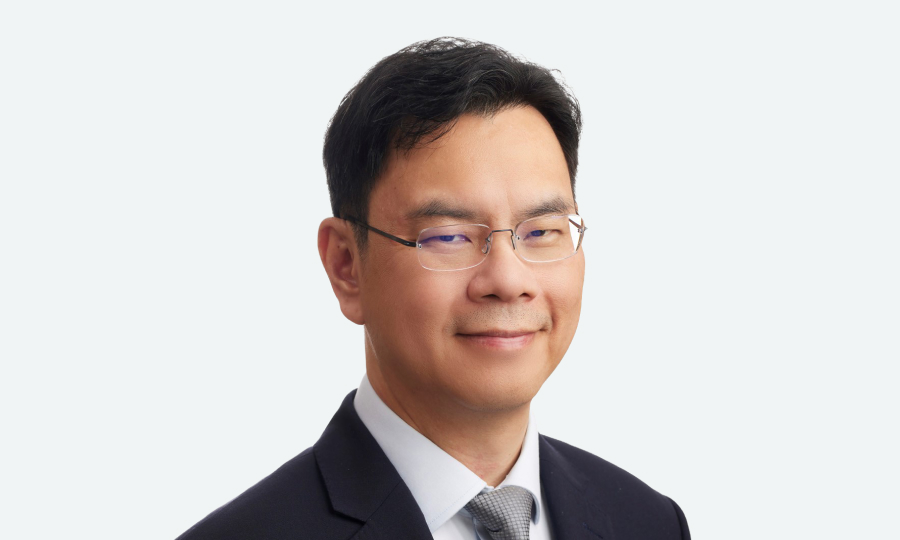
Managing Director, Monetary Authority of Singapore
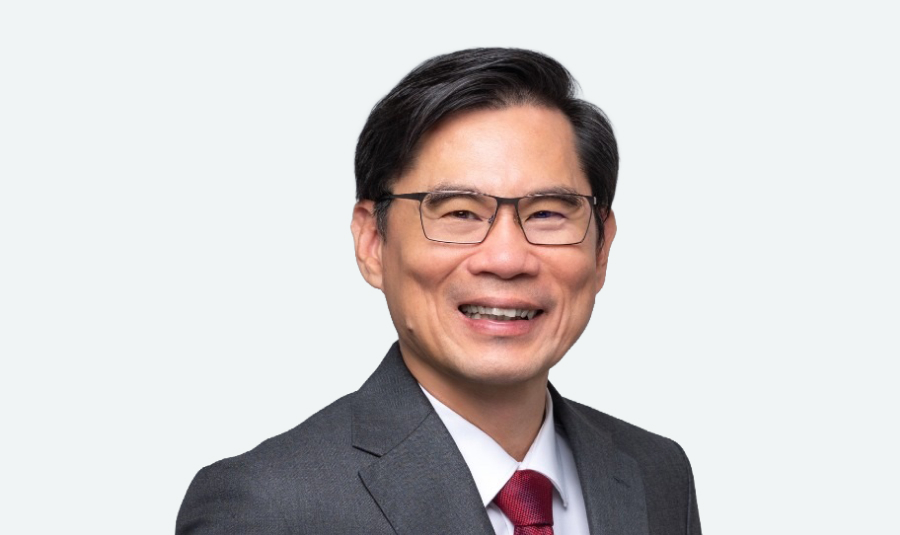
Chairman, The Association of Banks in Singapore, Group Chief Executive Officer & Executive Director, Oversea-Chinese Banking Corporate Limited
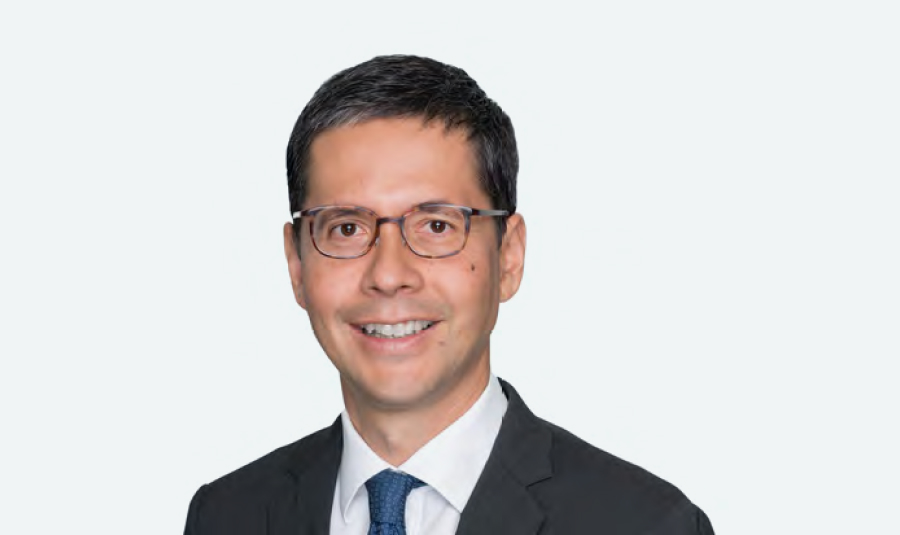
Chief Executive Officer, Singapore and ASEAN, Standard Chartered Bank (Singapore) Ltd

President, Life Insurance Association (LIA) Singapore; Chief Executive Officer, AIA Singapore Pte Ltd
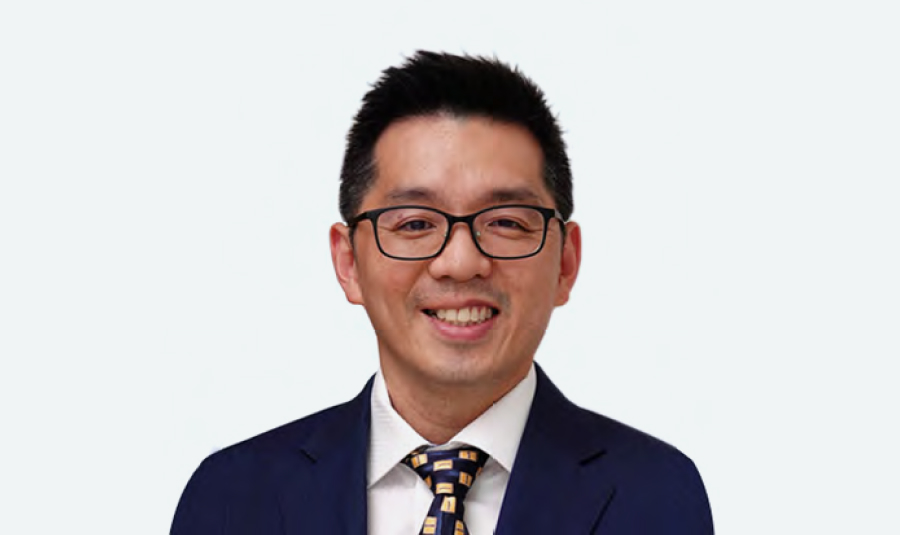
Group Director, Training Partners Group, SkillsFuture Singapore
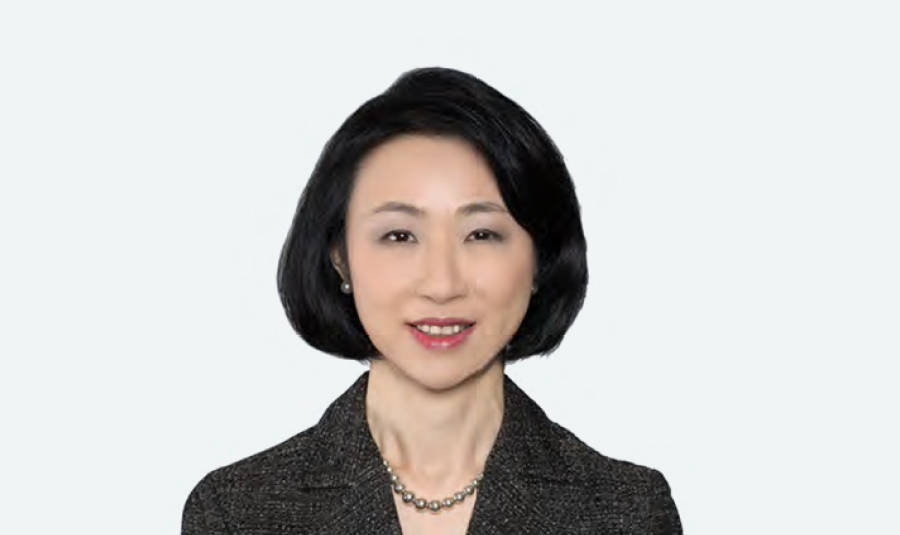
Chairman, Investment Management Association of Singapore (IMAS); Chief Executive Officer, Fullerton Fund Management Company Ltd

Group CEO, Great Eastern Holdings Limited
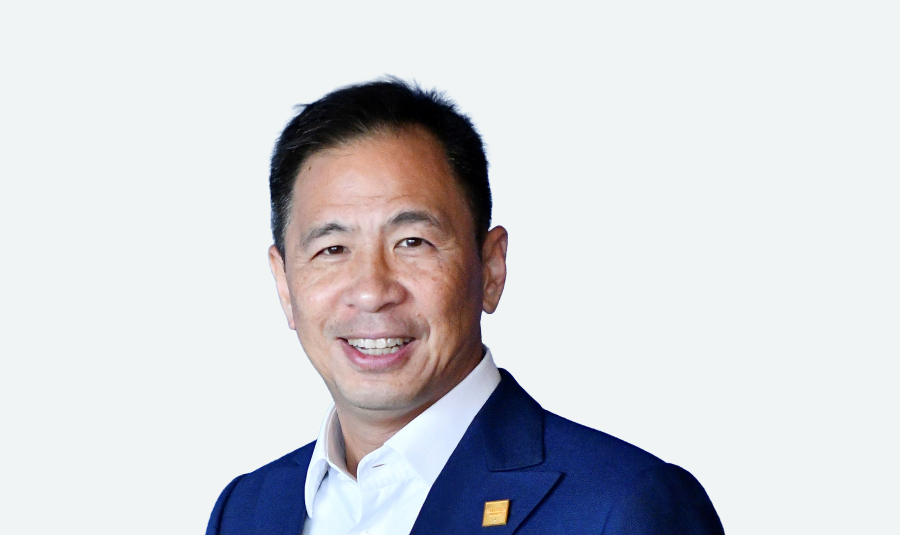
Managing Director, Citi Country Officer, Singapore, Citibank N.A.
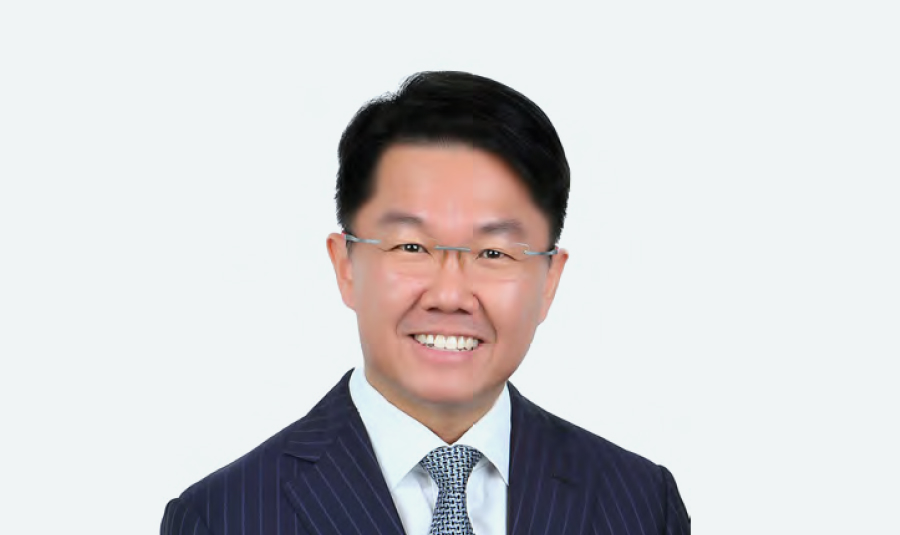
Deputy Managing Director, Markets and Development, Monetary Authority of Singapore
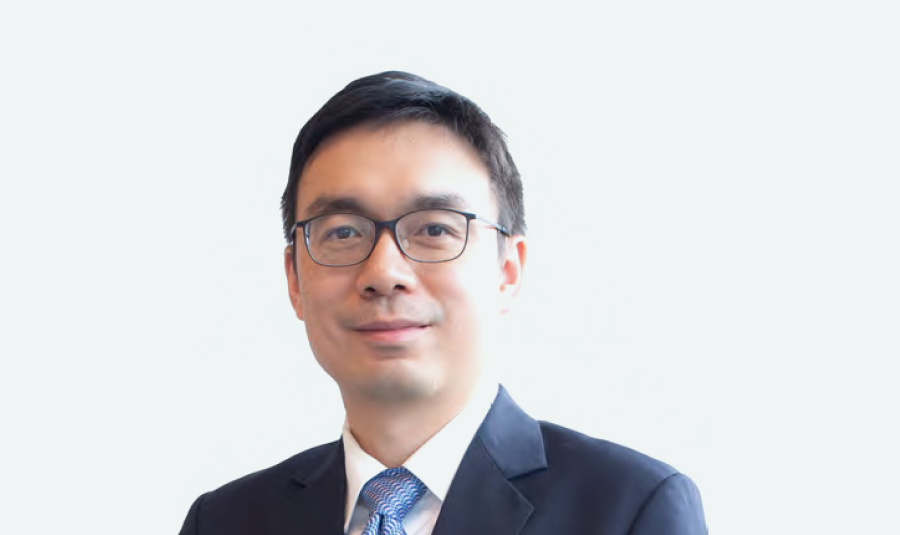
Deputy Co-Chairperson of SFEMC, Global Head of FX Trading and Head of Global Markets Southeast Asia, UBS AG
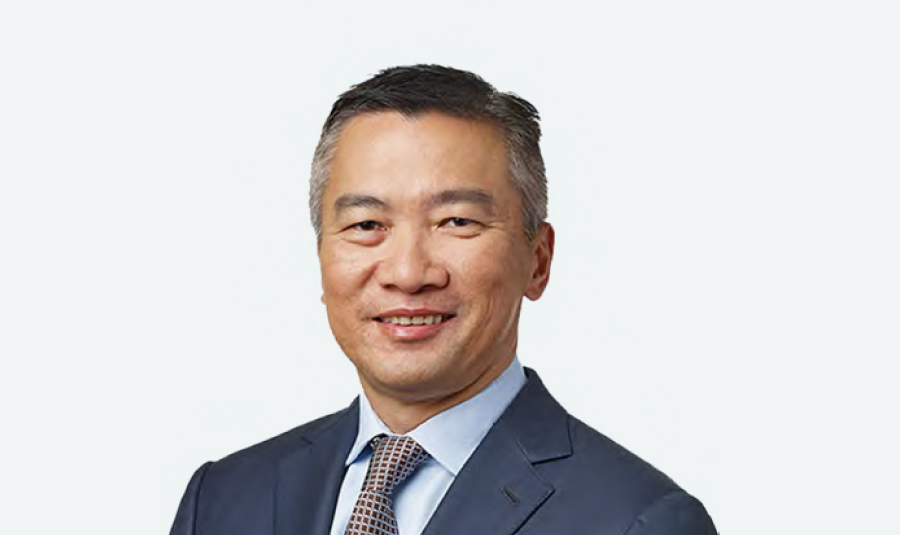
Chief Executive Officer, SGX Group

Assistant Chief Executive, Enterprise Development Group, Workforce Singapore
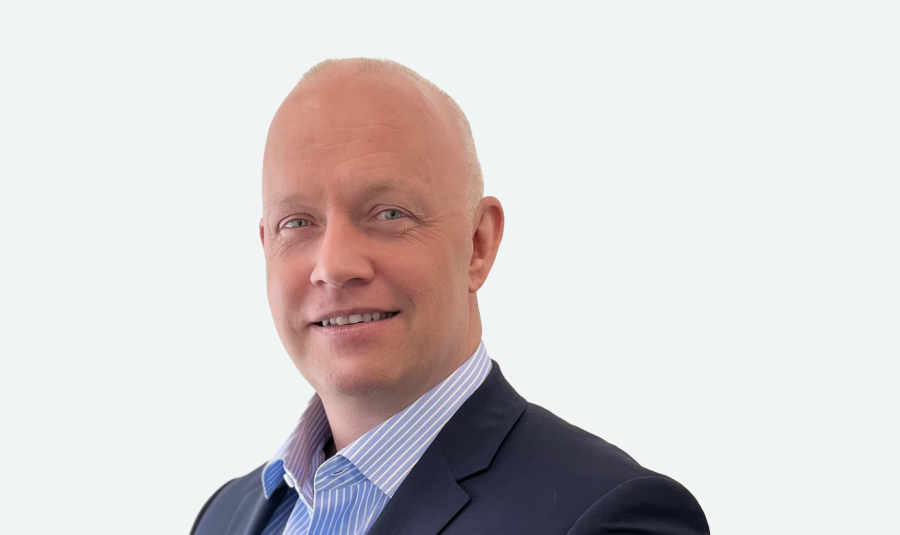
President, General Insurance Association of Singapore (GIA); President and Chief Executive Officer, AIG Asia Pacific Insurance Pte. Ltd.

Chief Executive Officer and Director,
DBS Group
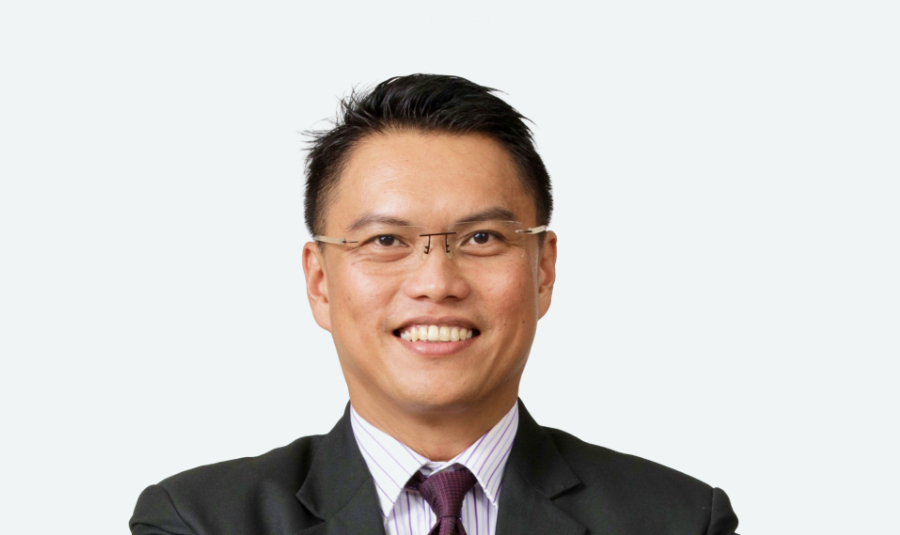
Assistant Secretary-General, National Trades Union Congress (NTUC); Co-Chairman, Financial Sector Tripartite Committee (FSTC)
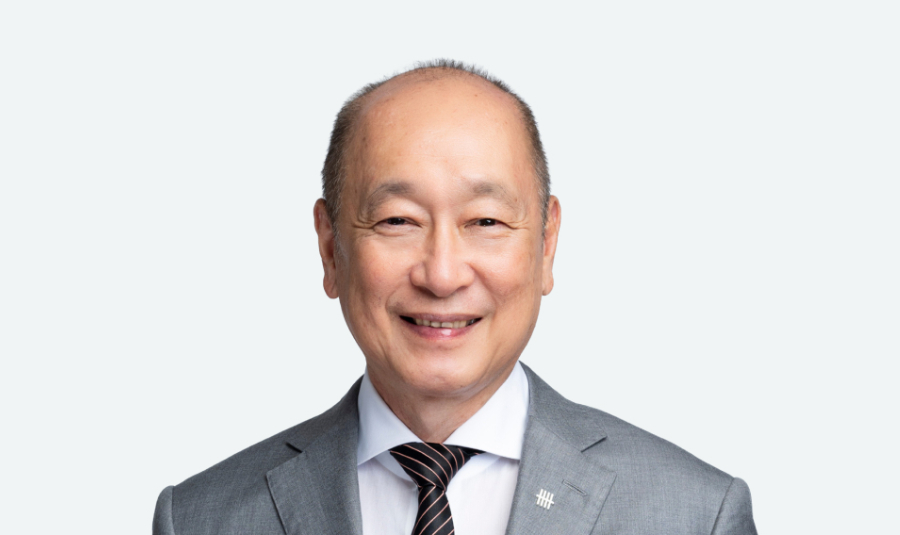
Deputy Chairman and Chief Executive Officer, United Overseas Bank Ltd
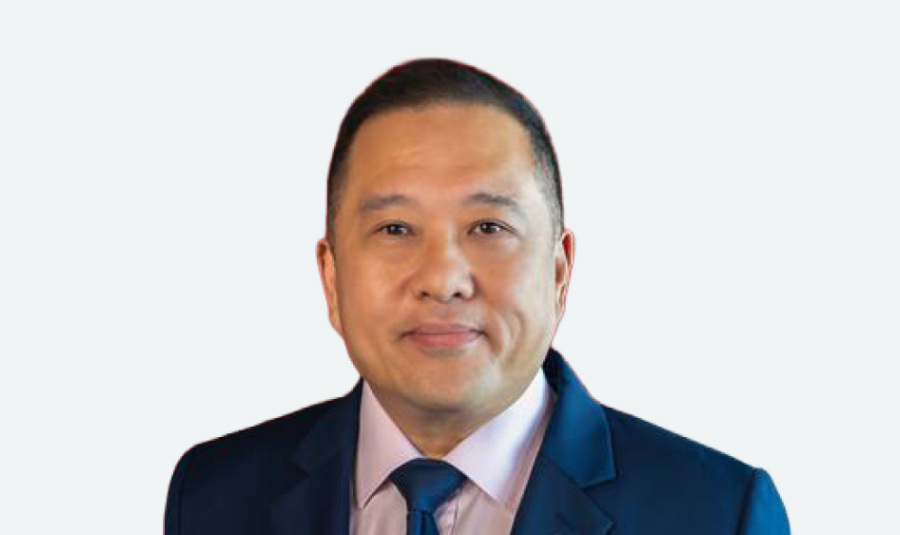
Chief Executive Officer, Singapore The Hongkong and Shanghai Banking Corporation Limited
The Council elects from its members a Chairman and Vice Chairman and appoints one member as Chairperson of the IBF Standards Committee and three of its members each to the Audit Committee.
The Committee Chairman and members have relevant qualifications and/or experience to provide effective oversight. Council members do not receive any remuneration for their service to the Institute. A declaration of interest submitted by members are surfaced at the next Council meeting to ensure that members continue to be aligned with the interests of the Institute.
The Council may have members who continue to serve more than 10 consecutive years in their role. Council members are nominated by various parties such as government agencies (i.e. Monetary Authority of Singapore, Ministry of Education and Ministry of Manpower) as well as local financial associations (represented by CEOs of financial institutions).
We thank the following members who have stepped down from the IBF Council:
The IBF Audit Committee oversees the Institute’s financial reporting process, risk management, internal control systems and processes and audit function.
Wong Sze Keed
President, Life Insurance Association (LIA) Singapore
Chief Executive Officer
AIA Singapore Pte Ltd
Foo Piao Zhou
Group Director, Training Partners Group
SkillsFuture Singapore
Jenny Sofian
Chairman, Investment Management Association of Singapore (IMAS)
Chief Executive Officer
Fullerton Fund Management Company Ltd
Pang Wai Yin
Board member, HCA Hospice;
Board member, Avanda Asia Vantage Fund
(as at May 2026)
The IBF Standards Committee comprises senior leaders representing key sub-segments of the financial sector, senior representatives from trade associations and government agencies. The Committee provides leadership and guidance to IBF on skills development and workforce transformation initiatives for the financial sector.
Patrick Lee
Chief Executive Officer, Singapore and ASEAN
Standard Chartered Bank (Singapore) Limited
Wong Sze Keed
President, Life Insurance Association (LIA) Singapore
Chairman of IBF Audit Committee
Chief Executive Officer, AIA Singapore Pte Ltd
Chan San San
Chief Executive Officer
Prudential Assurance Company Singapore
Catherine Cho
Executive Secretary
National Trade Union Congress
Janice Foo
Director (Designate), Creative & Professional Services Division
Workforce Singapore
Kelvin Hee
Director
Job-Skills Insight Division
SkillsFuture Singapore
Welson Jamin
Group Head of Operations
DBS Bank Ltd
Kenneth Lai
Group Managing Director, Head Global Markets
Global Markets Division
Oversea-Chinese Banking Corporation Ltd
Elaine Lam
Head of Global Corporate Banking
Oversea-Chinese Banking Corporation Ltd
Carolyn Neo
Chief Executive Officer
The Institute of Banking and Finance
Nimish Panchmatia
Chief Data and Transformation Officer
DBS Bank Ltd
Patricia Quek
Managing Director
Sector Head Singapore and Malaysia
UBS Global Wealth Management
Eleanor Seet
President & Head of Asia, ex-Japan
Amova Asset Management Asia Limited
Soh Kian Tiong
Chief Risk Officer
DBS Bank Ltd
Jacquelyn Tan
Managing Director and Head,
Group Personal Financial Services
United Overseas Bank Ltd
Kelvin Tan
Deputy General Manager
Bank of China, Singapore Branch
Loretta Yuen
General Counsel and Head of Group
Legal & Regulatory Compliance
Oversea-Chinese Banking Corporation Ltd
We thank the following members who have stepped down from the IBF Standards Committee:




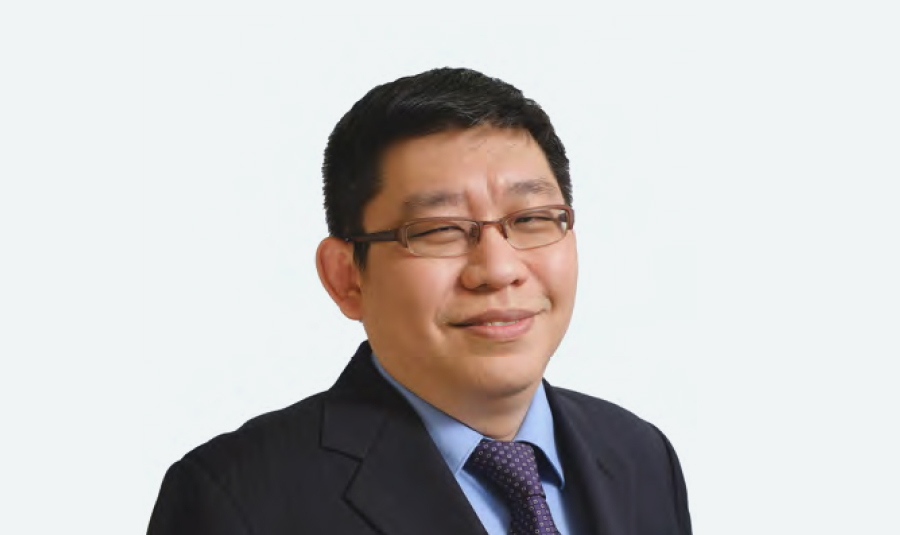





Ms Carolyn Neo
Chief Executive Officer
Deloitte & Touche LLP
Public Accountants and Chartered Accountants
Jaya Marlyni D/O Sivanesan
KGP Legal LLC
Advocates & Solicitors
(Reg No: 197402045E)
10 Shenton Way,
MAS Building #13-07/08
Singapore 079117